
Welding fumes are complex mixtures that can vary by welding process, base metal, consumables, coatings, ventilation, and work practices. Targeted industrial hygiene monitoring helps manufacturers understand what employees may actually be breathing.
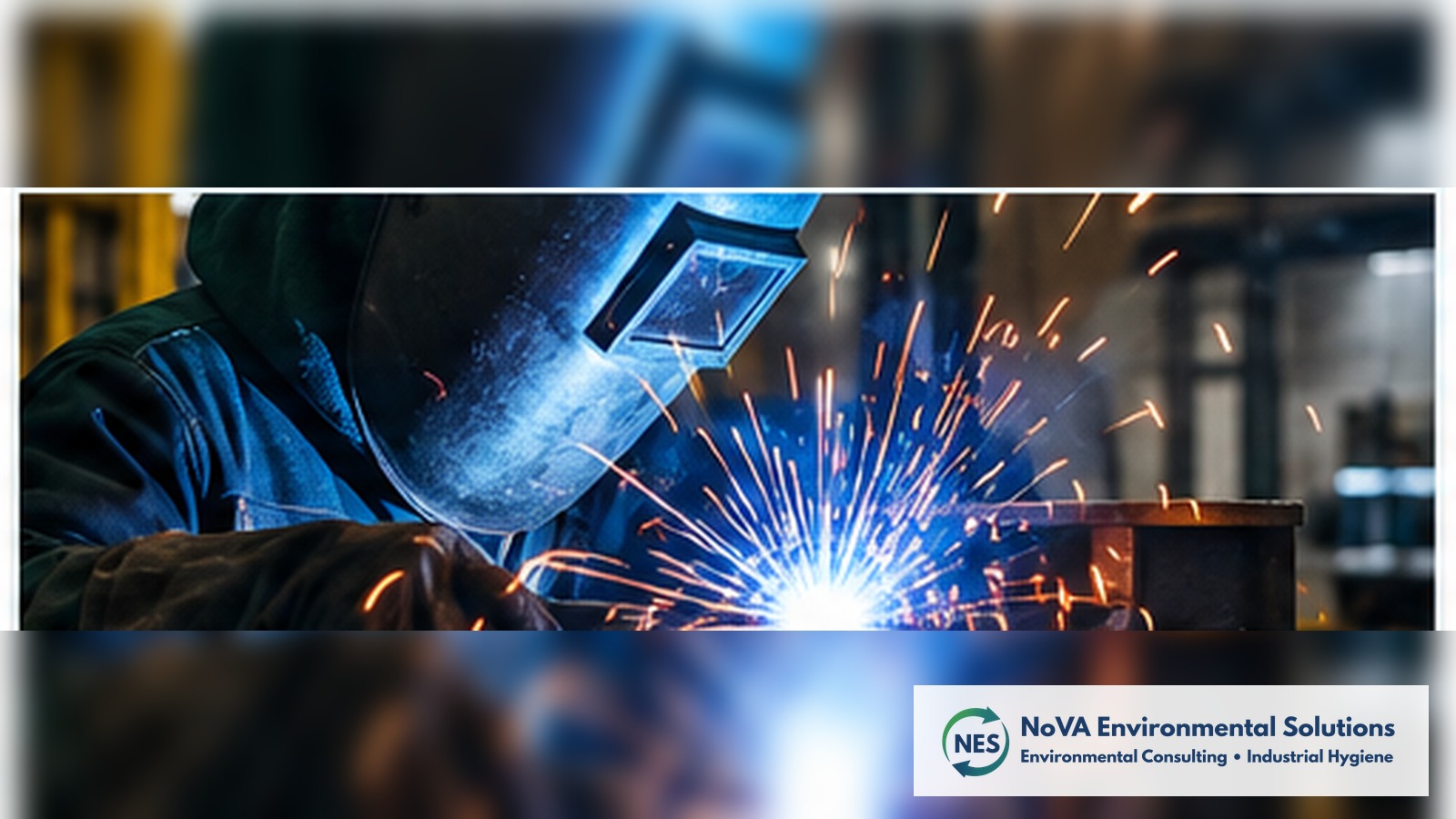
The composition and concentration of welding fume can vary substantially depending on the process, materials, coatings, ventilation, and work practices.
Welding is common in manufacturing, fabrication, maintenance, and repair operations. It can also generate a complex mixture of fumes and gases that varies depending on the welding process, base metal, consumables, coatings, and surrounding work environment.
For employers, determining whether employees are adequately protected requires more than observing whether visible smoke is present. A targeted industrial hygiene assessment can identify the contaminants that matter for the specific operation and measure employee exposure during representative work.
Welding fumes are composed of very small particles formed when metals are heated to high temperatures. Depending on the process and materials involved, the fume may contain iron, manganese, chromium, nickel, copper, zinc, lead, and other metals or compounds.
Welding operations may also generate gases and process-specific airborne contaminants. Because the composition can change from one operation to another, the sampling strategy should be based on the materials being welded, the consumables used, coatings or residues on the surface, and the welding method.
The composition of welding fume can change significantly when stainless steel, specialty alloys, galvanized materials, painted surfaces, primers, or other coatings are involved. Stainless steel welding, for example, may involve potential exposure to chromium and nickel compounds in addition to manganese, iron, and other metals.
Safety Data Sheets, base-metal specifications, welding consumable information, and process observations are therefore important when planning an exposure assessment.
A highly visible welding plume may draw immediate attention, but visibility alone does not establish the magnitude of employee exposure. Likewise, a relatively clean-looking operation can still generate small airborne particles that are not readily visible.
Personal breathing-zone sampling provides more meaningful exposure information because the sample travels with the employee during representative work. Area sampling and direct-reading measurements can supplement personal data by helping identify sources, evaluate controls, and understand conditions in the surrounding work area.
Welding-fume exposure can vary substantially with the welding process and settings, base-metal composition, electrode or wire, coatings and surface treatments, duration of welding, employee positioning, enclosure size, nearby operations, general ventilation, and local exhaust ventilation.
Two employees performing similar work can therefore experience different exposures. This is one reason an assessment should reflect actual job tasks and normal operating conditions rather than relying only on a general description of the process.
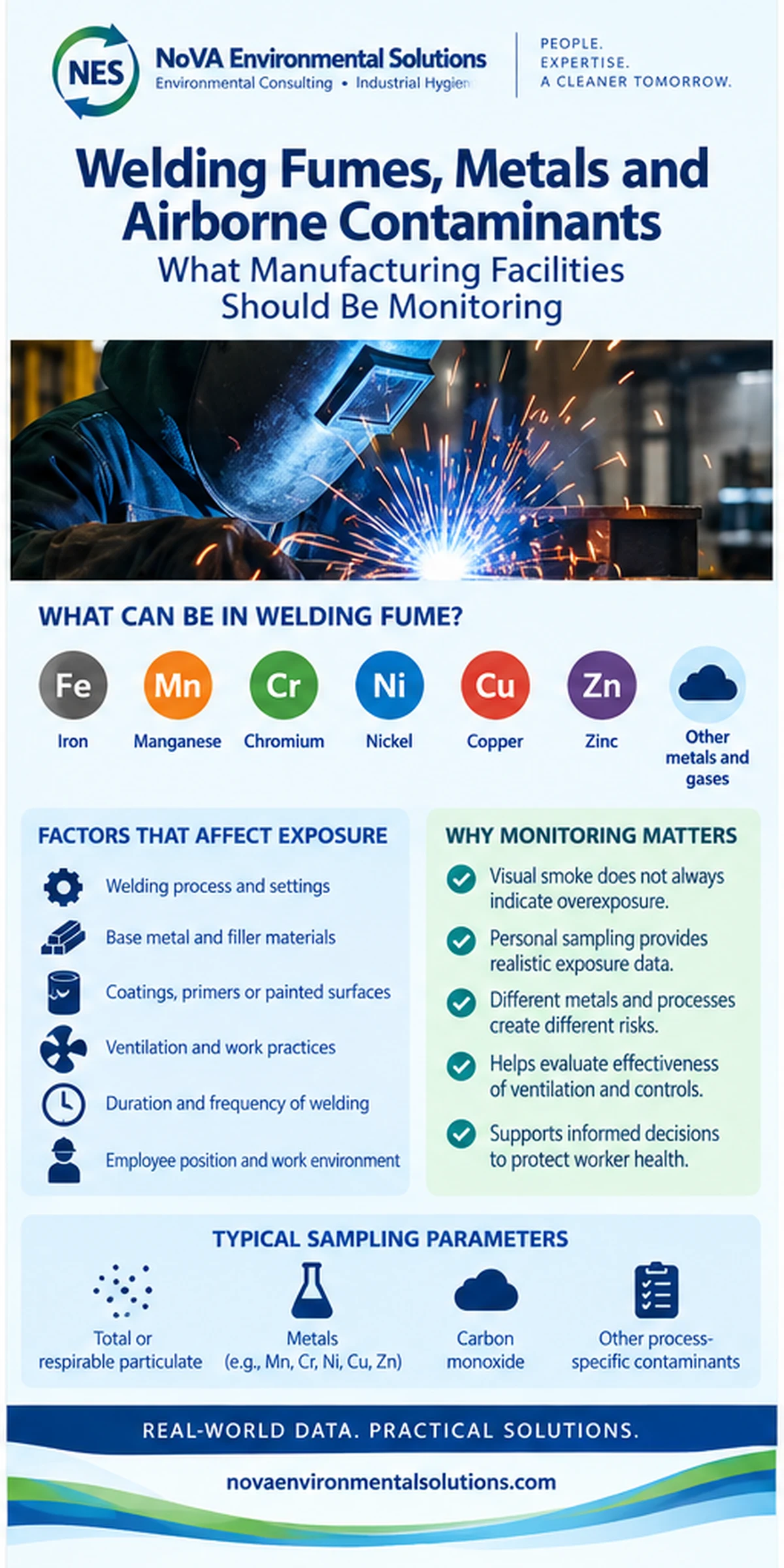
A welding-fume assessment should be designed around the actual process and materials rather than relying on a one-size-fits-all sampling panel.
Engineering controls are often an important component of welding-fume management. Local exhaust ventilation can capture contaminants near the point where they are generated before they disperse through the employee’s breathing zone.
However, simply having an exhaust arm or extraction system does not necessarily mean it is operating effectively. Hood position, capture velocity, maintenance, employee work practices, cross-drafts, and changes to the process can all affect control performance. Exposure monitoring can help evaluate whether the controls are achieving the intended result.
The appropriate sampling strategy depends on the welding process and materials involved. Monitoring may include total or respirable particulate, specific metals such as manganese, chromium, nickel, copper or zinc, carbon monoxide, and other process-specific contaminants.
There is no single “welding fume” panel that is appropriate for every facility. The industrial hygiene plan should be developed around the actual materials and tasks being evaluated.
NoVA Environmental Solutions can assist manufacturing and industrial facilities with review of welding processes, employee exposure monitoring, personal breathing-zone sampling, area monitoring, ventilation and work-practice evaluations, laboratory coordination, comparison with applicable occupational exposure criteria, technical reporting, and practical recommendations.
For manufacturers, exposure monitoring provides something visual observations alone cannot: objective information about what employees may actually be breathing while they work. That information can help facilities verify controls, prioritize improvements, and support ongoing occupational health and compliance programs.
For additional technical information, see NIOSH resources on welding fumes and manganese and the NIOSH Engineering Controls Database for welding-fume controls.